間 / MA
The Japanese Art of the Meaningful Pause
KOTO/The Intangible Resonance | MEGURU STILLNESS JAPAN
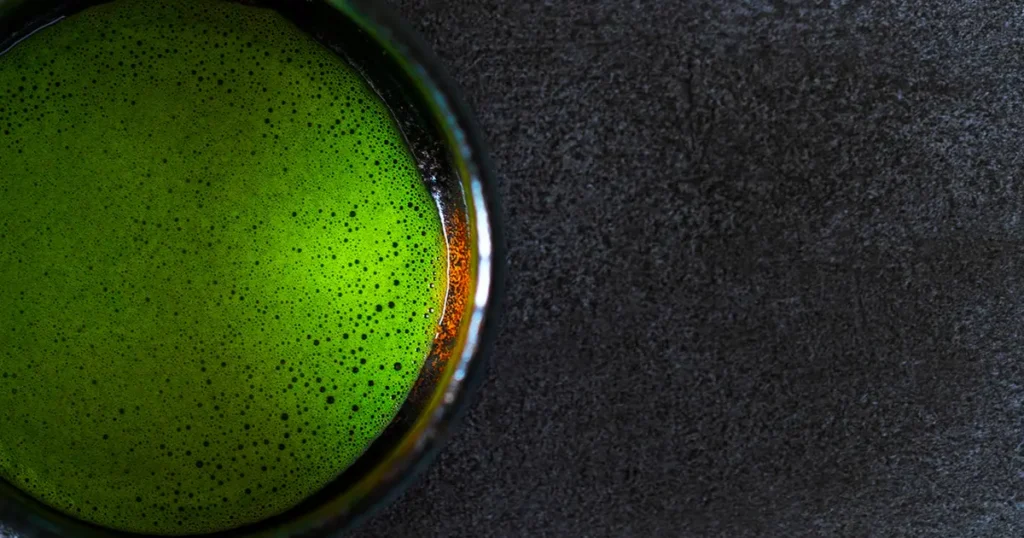
The guest kneels before the tokonoma before the tea has even been prepared. There is a single scroll hanging in the alcove, a single flower beside it, and nothing else — no second object competing for attention, no explanation offered for why this scroll and not another. The guest looks, says nothing, and is not expected to.
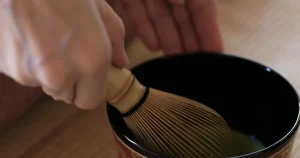
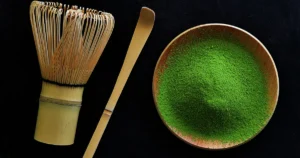
Behind a low partition, the host begins. The bamboo whisk moves in the bowl — a brisk, precise sound, back and forth, then stopping exactly when the foam is ready and not a moment later. The bowl is turned so its front faces the guest, and it is set down.
There is a pause here that has no name in most languages but has an exact one in this room: the moment after the bowl is offered and before the guest reaches for it. Nothing happens in it. And yet everything about the ceremony — its rhythm, its respect, its unhurried center — lives inside that single unclaimed second.
I. Ma Is Not Nothing
The easiest mistake to make about ma is to translate it as emptiness, and stop there. Emptiness suggests absence — a gap waiting to be filled, a lack. Ma is something closer to the opposite: a deliberate interval that has been left alone on purpose, because filling it would ruin what it was doing.
The pause before the guest reaches for the bowl is not a gap in the ceremony. It is load-bearing. Remove it, and what remains is merely someone handing someone else a cup of tea.
II. The Ma of Built Space
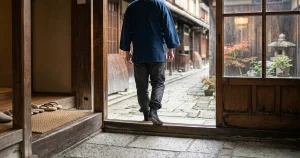
Traditional Japanese architecture is full of spaces that refuse to declare a single fixed purpose. A room bordered by sliding fusuma can be one room or two, depending only on whether the panels are open. An engawa, the narrow wooden veranda that runs along a house’s edge, belongs fully to neither inside nor outside — it is a threshold allowed to remain a threshold, rather than being forced to resolve into one or the other.
The tokonoma itself is perhaps the purest architectural expression of ma: a recessed space built to contain almost nothing, so that the one or two objects placed inside it can be seen clearly, without competition.
III. The Ma of Performance
In Noh theater, a performer can stand motionless at center stage for what feels, to an untrained audience, like an uncomfortably long time. Nothing about this stillness is a mistake or a lapse. It is choreographed as precisely as any movement, and the audience’s held breath during it is considered part of the performance, not a lull before it resumes.
Rakugo comic storytellers rely on an even more precise version of this: a well-placed silence immediately before a punchline, timed to the fraction of a second, does more comedic work than the line itself. Japanese has a phrase for getting this wrong — ma ga warui, “the ma is bad” — used for anything from an awkward joke to an ill-timed arrival.
IV. The Ma Between People
Conversations carry their own version of ma, and it is here that the concept most often gets lost in translation. Many cultures treat a silence in dialogue as something to be filled quickly, a small failure of the conversation to keep moving. In Japanese conversational norms, a comfortable silence between two people is frequently read as the opposite of failure — evidence that ma ga motete iru, that the ma is being held well.
Two people who can sit together without speaking, and feel no need to correct it, are often understood to have a closer relationship than two people who cannot bear a single unfilled second between them.
V. Being Able to Hold Ma
Taken together — the architecture, the performance, the conversation — ma stops looking like a design principle confined to rooms and stages, and starts looking like a skill available to an entire life. It asks something specific of a person: the ability to sit inside an interval of not-yet, without rushing to end it.
This is, in the end, what the pause before the tea bowl was teaching all along: that the interval itself is not empty time to survive before the good part begins. Often, it already is the good part.
Ma is not the absence of something happening. It is the trust that nothing needs to happen yet.
Where in your own life have you learned to hold a pause, rather than rushing to fill it?


Comments