武道の礼 / Budo no Rei
The Stillness Held Before and After Victory
KOTO/The Intangible Resonance | MEGURU STILLNESS JAPAN
Before We Begin — Nine Forms of Budo
Japan’s Nippon Budokan recognizes nine modern martial arts as budo — disciplines built as much around cultivating character as winning a contest. Each carries its own rei, but all nine share the same underlying grammar of bowing before the form is understood.
柔道/Judo
Throws and grappling, built around using an opponent’s force rather than opposing it directly.
剣道/Kendo
Bamboo-sword fencing descended from swordsmanship, fought within a code of decisive, single strikes.
空手道/Karatedo
A striking art of punches, kicks, and forms, refined into its modern shape largely in Okinawa.
合気道/Aikido
Circular redirection of an opponent’s momentum, with no competitive matches in its traditional practice.
弓道/Kyudo
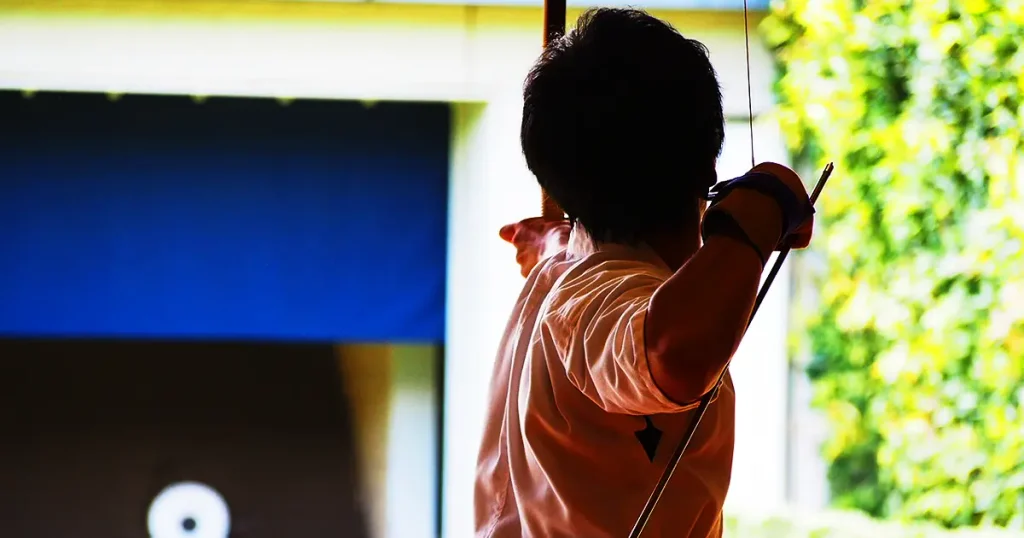
Japanese archery, where the long pause of drawing and holding the bow matters as much as the shot itself.
相撲/Sumo
Wrestling inside a small ring, wrapped in Shinto ritual older than the sport’s modern rules.
少林寺拳法/Shorinji Kempo
A 20th-century Japanese discipline combining striking and grappling with an explicit philosophy of mutual growth.
なぎなた/Naginata
A long-poled blade art with deep historical ties to women’s martial training in Japan.
銃剣道/Jukendo
Bayonet-fighting technique, the newest and least widely practiced of the nine recognized disciplines.
On the judo mat, the two competitors face each other and bow before either has touched the other’s sleeve. Nothing about the outcome exists yet. Rank, reputation, and the months of training either one has put in are, for this one moment, held in a kind of suspension — acknowledged, but not yet permitted to matter.
Minutes later, one throws the other cleanly to the mat. Ippon. The match is decisively over. And yet the winner does not raise a fist, does not turn to the crowd. There is a held beat — brief, but unmistakable — before either competitor moves again, and only after that beat do they return to face each other and bow a second time, in the same form as the first.
I. An Equalizing Pause Before Anything Is Decided
The bow that opens a match performs a specific kind of leveling. Whatever hierarchy exists outside the dojo — years of experience, prior wins against this exact opponent, a difference in rank visible in the color of a belt — is acknowledged by the bow rather than erased by it, and then set aside for the duration of what follows. The contest that is about to happen is permitted to happen on its own terms, uncontaminated by everything that came before it.
II. The Silence Immediately After the Decisive Point
The pause held immediately after ippon is, if anything, more demanding than the one before the match began. A decisive win produces an obvious, natural impulse to celebrate — and budo etiquette asks a competitor to hold that impulse in check for the length of a single held breath before any celebration, however restrained, is permitted.
This is not a rule about suppressing joy. It is a rule about sequence — ensuring the opponent’s defeat is acknowledged, in stillness, before the winner’s own emotion is allowed to take up the room.
III. What “Begins With Rei, Ends With Rei” Actually Means
Budo practitioners often cite the phrase rei ni hajimari, rei ni owaru — “begins with rei, ends with rei” — and its significance is easy to state but harder to fully absorb: the bow performed after a loss is, in form, identical to the one performed after a win. Nothing about its depth, timing, or execution changes based on the outcome it follows.
If the bow changed shape depending on whether a competitor had won or lost, it would simply be a reaction — a piece of theater layered on top of the result. Its unchanging form is precisely what proves it is not reacting to the outcome at all. It is bowing to something the outcome was never able to touch in the first place: the opponent’s willingness to have faced you, and the shared space both of you occupied to make the contest possible.
IV. Different Disciplines, Different Lengths of Pause
Not every budo holds its silence the same way. Judo and kendo compress the pause into a matter of seconds around a fast, decisive outcome. Kyudo stretches it out almost unbearably by comparison — the long, held moments of drawing and aiming the bow are treated as more central to the discipline than the release of the arrow itself, and a shot that lands off-target after a correctly held pause is not considered a failure of practice.
Aikido, in its traditional form, removes competitive victory from the equation almost entirely, which changes what the pause is even for — no longer a beat held between a winner’s impulse and its expression, but simply the space in which two people practice together without either one needing to lose.
V. A Familiar Instinct on the Other Side of the World
Western sport keeps its own version of this same impulse, even without organizing it into a formal bow. Boxers touch gloves before a fight begins. Handshakes are exchanged, often reluctantly, across a net or a mound immediately after a hard-fought loss. Cricket’s long-held notion of a “spirit of the game” explicitly discourages excessive celebration that might appear to humiliate an opponent, for reasons not far removed from the pause held after ippon.
What budo does differently is not the presence of this instinct but its consistency — the same bow, unchanged in form, required at both ends of every single match regardless of sport, rank, or outcome, rather than left to the discretion of whichever athlete happens to feel gracious that day.
The bow after a loss and the bow after a win are the same. That sameness is the entire point.
Is there a form in your own life that you only perform when things go well — and what might change if you held it just as steadily when they didn’t?



Comments