
The Unknown Craftsman
Why Is a Nameless Maker’s Bowl So Beautiful?
The Philosophy of Mingei · Part 4 of 12
MONO/The Tangible Stillness | MEGURU STILLNESS JAPAN
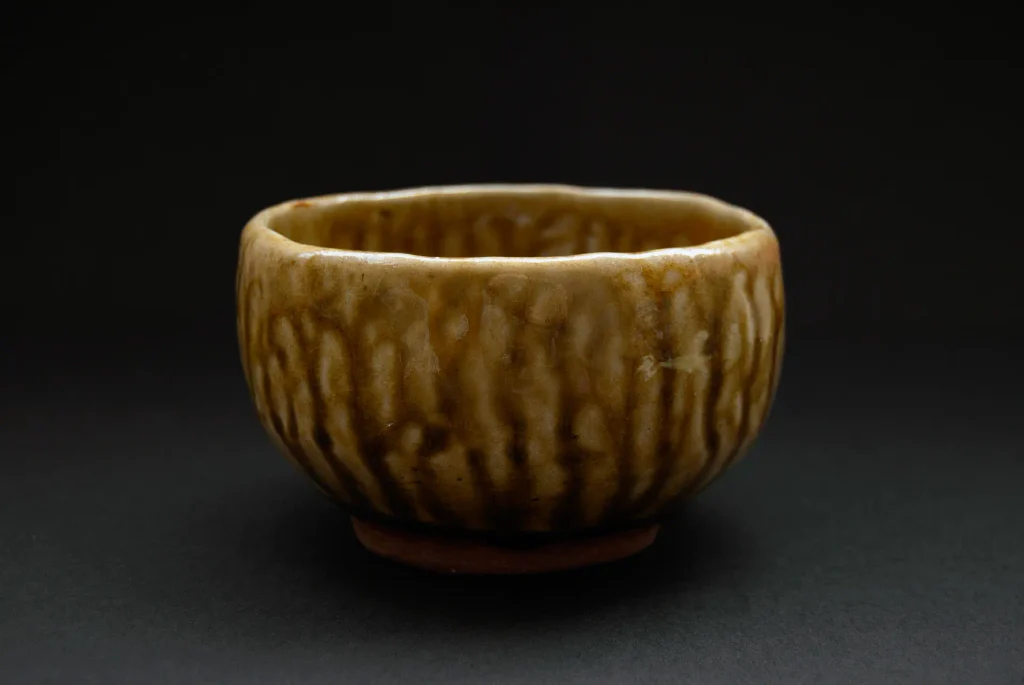
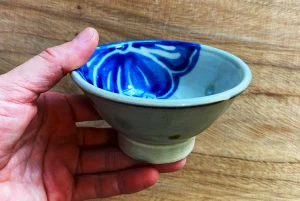
Turn the bowl over. On most works of art, the name would be here: a signature, a seal, a mark that tells you whose hands to credit. Here there is only the foot ring, a ring of bare clay, and three small scars where the bowl rested on its stand in the kiln. That is all the bowl has to say about the person who made it.
And yet people who have never heard of the maker pick it up, turn it in the light, and feel something they find hard to explain. Yanagi Soetsu spent much of his life trying to explain it. His answer came to rest on a phrase that later gave an English-language collection of his essays its title: the unknown craftsman.
I. A Name That Is Not There
In the art world, a name is shorthand for value. It tells you who to trust, what to pay, and how to rank the work against others. A signature is also a kind of promise that a single mind stands behind the object. Yanagi asked a question that sounds simple and is not: what if the most trustworthy beauty is the kind that no single mind claimed?
This does not mean the makers lacked skill. Quite the opposite. It means the skill was not being used to build a reputation.
II. Unknown to Us, Not to Each Other
A small correction is worth making early. These makers were not nameless to the people around them. In their villages, everyone knew who threw the best jars and whose glaze ran thin. The anonymity belongs to the record and to our distance from it, not to their lives. “Unknown” describes what we know. It says nothing about who they were to each other.
The idea can also be romanticized, and later parts of this series will examine that risk, including the fact that a movement celebrating anonymity produced famous names of its own. For now, the point is a modest one: that a great deal of the beauty we love was made by people whose names did not survive, and that it was not made any worse for that.
III. Beauty Without Striving
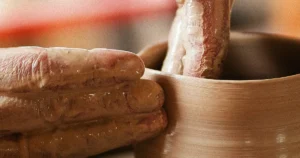
Anyone who has watched a beginner try to make something “artistic” knows the problem. The effort shows. The decoration is stiff, the shape self-conscious. Experienced makers of everyday ware tended to work the other way around. They threw the same form hundreds of times in a day, hands moving without hesitation, attention on the clay and the task rather than on how the result would look.
It is close to the Zen idea of mushin, “no-mind,” the state in which skill has become so complete that the self no longer stands in its way. Yanagi saw in such work a beauty that arrives not because it was pursued, but because nothing was getting in the way.
IV. Other-Power
In his later writing, Yanagi connected this idea to Pure Land Buddhism and its concept of tariki, “other-power,” the notion that salvation comes not from one’s own effort alone but from relying on something larger than the self. He applied it to craft. The unknown craftsman, in this view, does not produce beauty alone. The work is carried by tradition, by the nature of the clay, by the climate, by the accumulated habits of a community.
A maker who understands this has less to prove. The glaze recipe was inherited. The clay came from a nearby hillside. A hundred earlier hands refined the shape. What remains for the individual is to do the work honestly, and to trust the rest.
V. A Tradition Is a Long Conversation
There is a more practical way to say the same thing. A pottery community that has made the same kinds of vessels for generations is carrying on a very long conversation. Each maker adds a small adjustment, a slightly thicker rim, a better way to stack the kiln. Most of those adjustments are never recorded under anyone’s name. They simply persist, because they worked.
Seen this way, the individual maker is one sentence in a conversation that began long before them and will continue after. In a few mountain communities in Japan, families have made the same kinds of everyday pots for generations, often without signing them. The bowls carry the whole conversation in their shape.
VI. Cathedrals and Quilts
Readers in the West will recognize versions of this instinct. The stonemasons who built medieval cathedrals are largely unknown, and the nineteenth-century critic John Ruskin praised their work as full of a life that more polished, signed work often lacks, an admiration that shaped the Arts and Crafts movement and reached Yanagi’s generation. In North America, countless quilts survive without a maker’s name, valued for the patience and pattern stitched into them by hands no record preserved.
The details differ, and so do the reasons. But the shared recognition is plain: that a thing can be made with great care by someone we will never be able to name, and be none the worse, perhaps even the better, for the absence of a signature.
A signature tells you who made a thing. A tradition tells you how many people it took.
Ways to Begin — With the Work of Unnamed Hands
You can start with Yanagi’s own words, or with an object whose maker’s name matters less than the tradition behind it.
The Unknown Craftsman: A Japanese Insight into Beauty
Soetsu Yanagi, adapted by Bernard Leach. The collection that carries this series’ central idea in its title.
An everyday piece from a working pottery community
Look for kiln communities where families have made the same forms for generations, such as Onta in Oita.
A woven basket or bamboo colander
Everyday work in natural fiber, often made by makers whose names never reach the label.

Comments