Beauty in everyday crafts
The Beauty of Things Made to Be Used
The Philosophy of Mingei · Part 3 of 12
MONO/The Tangible Stillness | MEGURU STILLNESS JAPAN
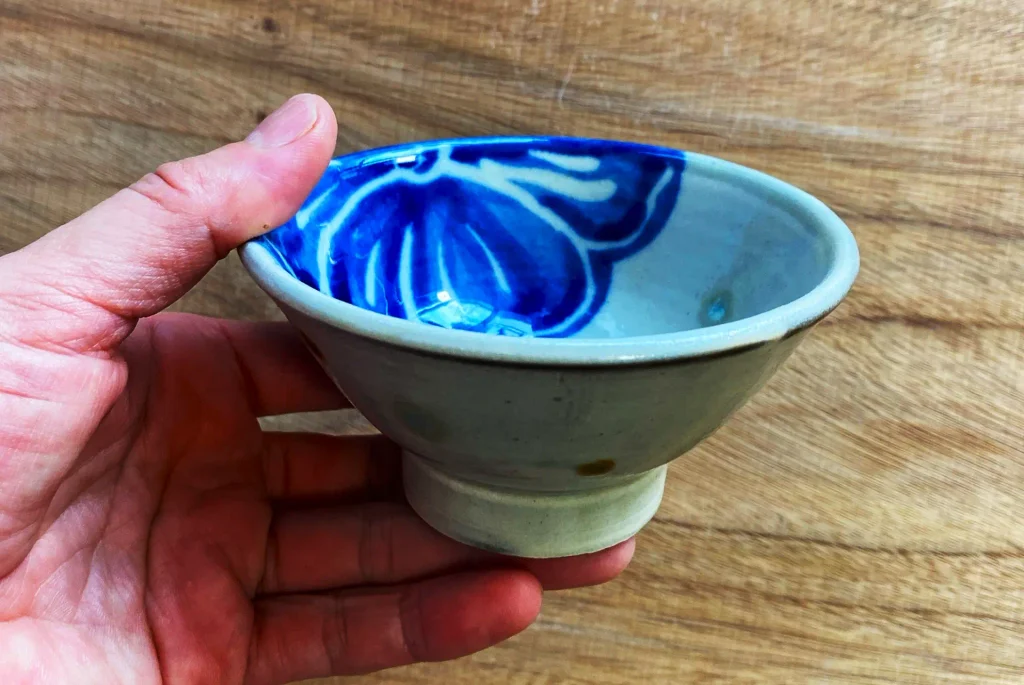
A rice bowl dries on a rack beside the sink. It is not remarkable at first glance. But look closely, and its surface holds a history. A faint, smooth patch on the rim shows where lips have met it for years. The foot ring is polished where it has slid across a wooden table. Tea and rice water have settled into the finest cracks of the glaze and left a pale map there.
None of this was in the bowl when the potter set it down. All of it was added by use. Yanagi Soetsu built one of his central ideas around exactly this observation, and gave it a name: yo no bi, the beauty of use.
I. A Bowl Made for a Hand
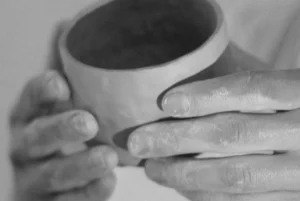
Start with the shape. A Japanese rice bowl is meant to be lifted and held in one hand while the other uses chopsticks. Everything about it follows from that. The foot ring gives the bowl a stable base and a place for the fingers to rest. The body is sized to sit in a palm. The rim is thin enough to sit comfortably on the lips, and the walls are thick enough to keep the rice warm without burning the fingers.
It is a bowl designed for a hand, not for a table. The beauty people notice in it is largely the beauty of that fit.
II. What “Use” Actually Means
The character for use, 用, carries more than convenience. It appears in words for errands, preparation, and tasks that need doing. To use something is to put it into service of a life. Yo no bi therefore does not mean that practical objects happen to be pleasant to look at. It means that beauty and use are not two separate qualities competing for space in an object. They can be one quality seen from two sides.
This is the difference between an ornament added to a useful thing and a beauty that comes from the usefulness itself.
III. Constraint as a Teacher
There is a practical reason such objects tend to look resolved. A potter who makes the same kind of bowl thousands of times, for households that use them every day, receives constant, unspoken feedback. A rim that chips too easily gets thickened. A foot that wobbles gets corrected. A bowl that feels clumsy in the hand is quietly abandoned, and the shape that survives is the one that kept working.
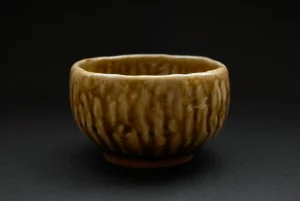
Even decoration often grows out of the work itself. In Koishiwara, a technique known as tobi-kanna lets a flexible blade chatter against spinning clay and leave a rhythm of small, regular marks—no one needed to draw the pattern. The tool and the clay produced it together.
IV. Use Finishes the Object
If shape is the first half of the idea, time is the second. Many materials change when they are used. Wood darkens and smooths under the hands. Lacquer deepens. Cotton softens. In Hagi ware, tea slowly seeps into fine crackles in the glaze, and the color of the vessel shifts with use, so much so that there is a saying in Japan about the seven transformations of Hagi.
In that sense, a bowl is not finished when the potter sets it down. It is finished, slowly and never entirely, by the person who uses it.
V. An Idea With Limits
It would be too easy to turn this into a slogan, so it is worth saying plainly what yo no bi does not claim. Not everything useful is beautiful. A great many functional objects are ugly, and a great many handmade objects are merely rustic. The claim is narrower and more interesting: that objects shaped over a long time by honest use, in the hands of people who know their purpose well, tend to arrive at a particular kind of beauty.
Later parts of this series will test the idea against its critics, and against the question of what happens when machines make things for use as well.
VI. A Conviction Many Hands Share
Readers in North America may recognize the instinct. “Form follows function” became a rallying phrase for modern design more than a century ago. And most people who cook have met the quieter, domestic version: a cast-iron skillet seasoned over years until it cooks better than it did new, or a baseball glove broken in so thoroughly that it takes the shape of one particular hand.
These traditions have different histories and different vocabularies. But they share the recognition that the best objects are the ones that get better because someone kept using them.
A bowl is not finished when the potter sets it down. It is finished when it has been used long enough to look like it belongs to someone.
Ways to Begin — With Something Made for a Hand
Objects that reward use are the easiest place to start. Choose the one you will actually reach for every day.
A simple rice bowl with a defined foot ring
Look for a size that sits comfortably in one palm and a rim that feels thin and even at the lips.
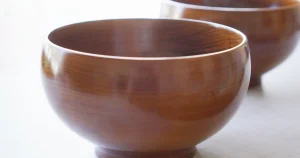
A plain lacquered soup bowl
Lacquerware that deepens in tone with daily use and can be repaired rather than replaced.
A plain wooden tray or serving paddle
Untreated or lightly finished wood that darkens and smooths under the hands over time.

Comments