
The Circle Around Yanagi
Mingei no Nakama-tachi
MONO/The Tangible Stillness | MEGURU STILLNESS JAPAN
The Philosophy of Mingei · Part 6 of 12
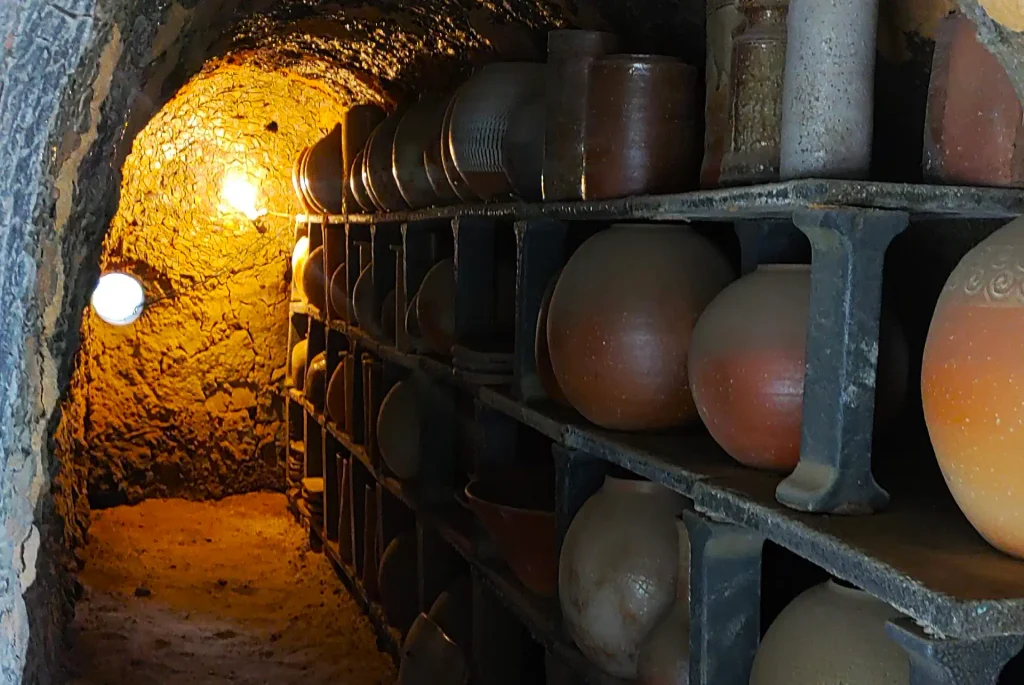
On a hillside above a Cornish harbor, a long kiln climbs the slope in a form that has nothing to do with Cornwall. Its chambers step upward like a staircase, a design brought from Japan. Two men are stacking pots inside it. One is English and has spent roughly ten years in Japan before returning. The other is Japanese, newly arrived, and has come a very long way to help build a kiln in a place where nobody has seen one like it.
The year is 1920. Neither man yet knows that this friendship will carry an idea around the world. They are simply doing what the friends around Yanagi Soetsu did best: working with their hands, together, on something they believed in.
I. A Thinker Needs Hands
It is easy to tell the story of mingei as the story of one man. But Yanagi was a philosopher and critic, not a potter. He could describe what he saw with great force. He could not fire a kiln. The movement became more than an argument because it was surrounded by people who could make things, and who tested his ideas against clay, fire, and the reality of selling a bowl.
The core of that circle was three people: the Japanese potters Hamada Shoji and Kawai Kanjiro, and the English potter Bernard Leach. Others joined its wider orbit, among them the potter Tomimoto Kenkichi, the textile dyer Serizawa Keisuke, and the printmaker Munakata Shiko, who are also remembered as part of the movement.
II. Hamada: Staying Close to the Local
Hamada Shoji studied ceramics in Tokyo, where he came under the influence of Kawai, and later worked at a ceramics research institute in Kyoto. In 1920, he traveled to England at Leach’s invitation, and spent about three years in St Ives. What he took from the experience, by most accounts, was a conviction about using local materials and living inside a tradition rather than standing apart from it.
He returned to Japan in 1923 and eventually settled in Mashiko, north of Tokyo, a town of working potters. There he used local clay and glazes and made his home among the makers. In 1955, he was designated a Living National Treasure, and after Yanagi died in 1961, he took over the leadership of the Japan Mingei Museum.
III. Kawai: The One Who Said No
Kawai Kanjiro chose a different path. Working in Kyoto, he made pottery of remarkable range, and also wrote, carved wood, and made sculpture. He was admired at home and abroad, and he was offered the highest honors available to a Japanese craftsman. He declined them, including the designation of Living National Treasure and the Order of Culture.
In a movement that celebrated the unnamed maker, there is something fitting about the member who refused to be named in the official register. It was not the only way to live the idea. But it was one of the clearest.
IV. Leach: A Bridge Across the Sea
Bernard Leach is often called the father of British studio pottery, and his place in this story is a bridge. He had lived in Japan, learned from its potters, and absorbed a way of seeing ceramics that was almost unknown in Britain. When he returned and built his kiln in St Ives, with Hamada’s help, he began carrying that way of seeing into the English-speaking world.
That bridge carried traffic in both directions. Leach helped bring Yanagi’s ideas to readers in English, including the collection of essays discussed earlier in this series. In the early 1950s, Hamada, Leach, and Yanagi took part in a gathering at Dartington Hall in England, where the mingei philosophy was presented to a European audience.
V. Three Answers to One Paradox
Part 4 of this series noted a paradox at the heart of mingei: a movement that praised anonymous makers produced famous names of its own. The circle around Yanagi did not resolve this tension. Each of its members answered it differently, and the differences are instructive.
Hamada accepted public recognition and used it to support the tradition he worked in. Kawai refused it and let the work speak without a title. Leach became a figure of authority in a field, studio pottery, that was itself built on the idea of the named individual maker. None of the three is clearly right. Together, they show that living an idea is harder than stating it.
VI. A Friendship That Crossed an Ocean
Readers in North America have their own link to this story. Through exhibitions, demonstrations, and invitations to teach, Hamada and Leach became well known among studio potters in the United States, and their emphasis on functional, honestly made pottery shaped many American potters who worked in the decades that followed.
There is also something familiar in the shape of the story itself. Movements in craft, art, and design are rarely the work of one mind. They tend to begin as friendships, among people who share a conviction and are willing to travel, argue, and fire kilns together. Mingei was one of them.
A movement is rarely one person’s idea. It is usually a friendship that has learned to say the same thing in different ways.
Ways to Begin — With the Circle’s Own Work
You can start with Leach’s classic book on the potter’s way of thinking, or with pottery from the town Hamada made his home.
A Potter’s Book
Bernard Leach. A classic English-language account of the potter’s craft and way of thinking.
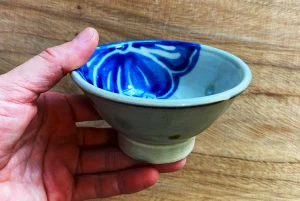
An everyday piece of Mashiko pottery
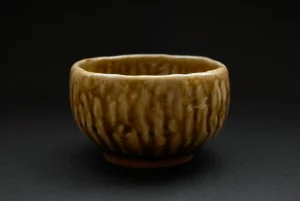
Mashiko remains a town of working potters. Look for a mug, bowl, or plate made in the region.
Visit Kawai Kanjiro’s House in Kyoto
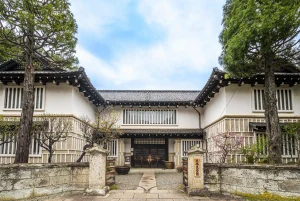
The potter’s former home and workshop is open as a museum, a possible future TABI destination.


Comments