
When an Everyday Bowl Became a National Treasure
Kizaemon Ido
MONO/The Tangible Stillness | MEGURU STILLNESS JAPAN
The Philosophy of Mingei · Part 5 of 12
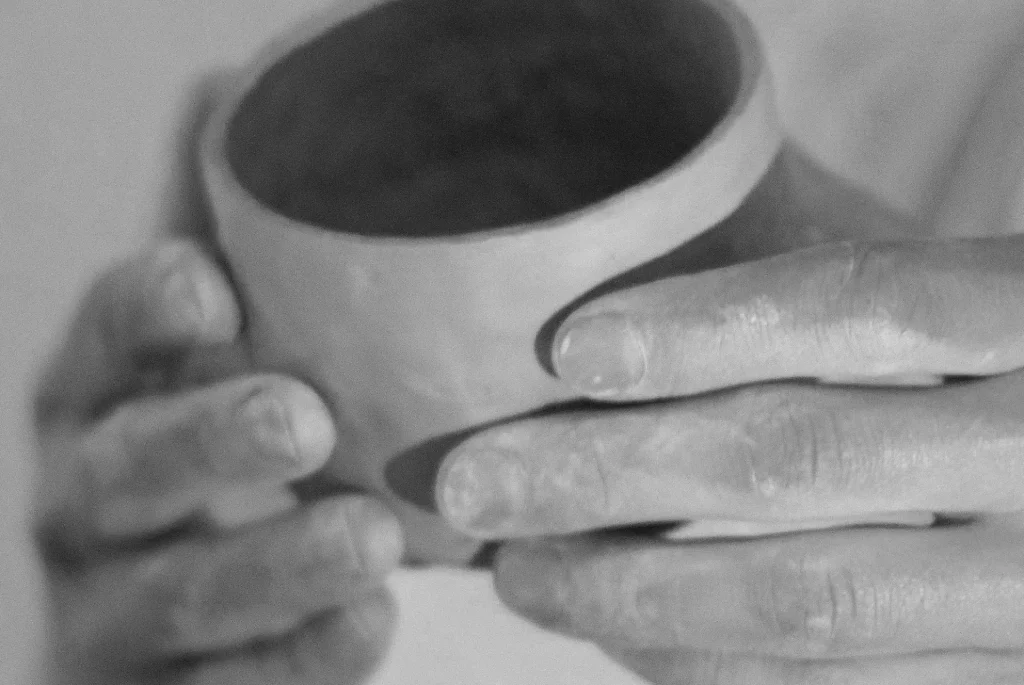
A bowl of this rank does not simply appear. It arrives the way the most prized tea objects do: lifted from a wooden box, drawn out of a silk pouch, sometimes out of a second pouch beneath the first, each layer set aside with care. By the time the last cloth is folded back, the room has already been taught how to behave.
In 1931, Yanagi Soetsu was shown the Kizaemon Ido in the company of his friend, the potter Kawai Kanjiro. He had wanted to see it for a long time. By his own account, what he found was not a monument. It was a plain bowl with no ornament and no calculation, one that looked, to him, very much like a bowl made to hold rice.
I. The King of Tea Bowls
The Kizaemon Ido is a Korean bowl of the Ido type, made in the sixteenth century, and it is kept at Kohoan, a sub-temple of Daitoku-ji in Kyoto. It is a National Treasure, and the only Ido-style bowl to hold that designation. Tea circles have long treated it as the finest of its kind.
Describe it plainly, and it sounds almost unremarkable: a broad bowl with a soft, yellowish glaze the color of loquat, a body that leans slightly, and a rough, granular texture where the glaze has crawled and gathered near the foot. The marvel is that such features are exactly what its admirers prize.
II. A Bowl With a Rumor
Every famous object collects stories, and this one collected a darker kind. The bowl takes its name from Takeda Kizaemon, a wealthy Osaka merchant of the early seventeenth century, who is said to have lost his fortune. A persistent legend followed the bowl through later owners: that whoever kept it would be afflicted with boils.
Whatever one makes of the legend, it tells us something real: by the time the bowl was admired as a treasure, it was already wrapped in narrative. Rumor, lineage, and reputation had started to surround it, long before anyone like Yanagi arrived to ask what was actually in the bowl itself.
III. What Yanagi Saw
Yanagi’s claim, set out in an essay later translated into English, was striking. He argued that this supposedly supreme tea bowl was, at its origin, an ordinary rice bowl, made in large numbers by Korean potters for everyday use, with no thought of tea and no ambition to be beautiful. The Koreans who made such bowls, he suggested, might even have laughed to see one enthroned in a Japanese tea room.
For Yanagi, that origin was not a flaw in the story. It was the point. The bowl was beautiful because it had been made without striving: made quickly, made often, made to be used and forgotten. Here, in the most famous bowl in Japan, was the clearest example of everything the earlier parts of this series have described.
IV. The Art of Seeing Anew
There is a second figure in this story, and Yanagi was careful to honor it: the sixteenth-century tea master who first looked at a Korean bowl made in an ordinary kiln and saw something extraordinary. Tea practitioners call this act mitate, roughly “seeing anew,” the ability to take a thing from one context and recognize that it belongs in another. It is closely tied to the wabi aesthetic that Sen no Rikyu helped bring to maturity, and to the same instinct explored in our piece on the tea room.
Yanagi admired that eye. What he was uneasy about was what came after: a tea world in which the bowl’s lineage, rank, and price came to matter more than the seeing that had first elevated it.
V. The Paradox of the Treasure
The story ends in an irony that is hard to miss. A bowl celebrated for being ordinary is now among the most guarded objects in Japan, kept in a temple and rarely seen. Yanagi’s own essay, which praised its unselfconscious origins, added to its fame. The bowl that was supposed to prove the beauty of the unnamed now carries one of the most famous names in tea.
It is also worth saying that the history of Ido bowls is not fully settled. What such bowls were made for in Korea, and how ordinary they really were, has been debated. Yanagi offered a powerful way of seeing the Kizaemon Ido. He did not close the question, and later parts of this series will return to the limits of his view.
VI. Finding Treasure in an Overlooked Thing
Readers in North America may recognize a version of this story from their own lives. The thrill of spotting something beautiful at a flea market or an estate sale, an object everyone else walked past, rests on the same impulse as mitate. In the twentieth century, artists such as Marcel Duchamp made a different use of the idea, placing ordinary objects in galleries to question how value is assigned at all.
The Kizaemon Ido belongs to neither tradition exactly. But it sits in the same family of questions: who decides what is beautiful, and what happens to a thing once they do?
A bowl made for rice became a treasure not when it was made, but when someone first saw it.
Ways to Begin — With an Eye for the Overlooked
The essay behind this article is available in English, and the habit of seeing anew can be practiced with a single bowl.
The Unknown Craftsman: A Japanese Insight into Beauty
Soetsu Yanagi, adapted by Bernard Leach. Contains Yanagi’s essay on the Kizaemon tea bowl.
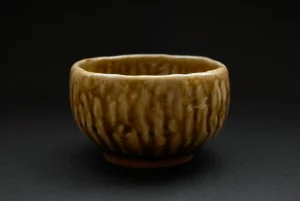
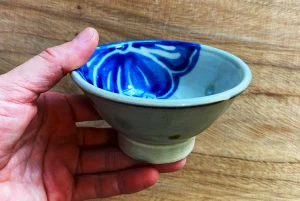
A plain, rough-glazed bowl for tea or rice
Look for soft color, an uneven surface, and a form that invites the hand rather than the display shelf.
A kintsugi repair kit for a bowl you cannot bear to lose
See our article on kintsugi. Check whether a kit uses true urushi lacquer, which can irritate skin, or a synthetic alternative.


Comments