
Jūgoya to Jūsanya
The aesthetics of viewing the moon twice
FOUR SEASONS/AUTUMN | MEGURU STILLNESS JAPAN
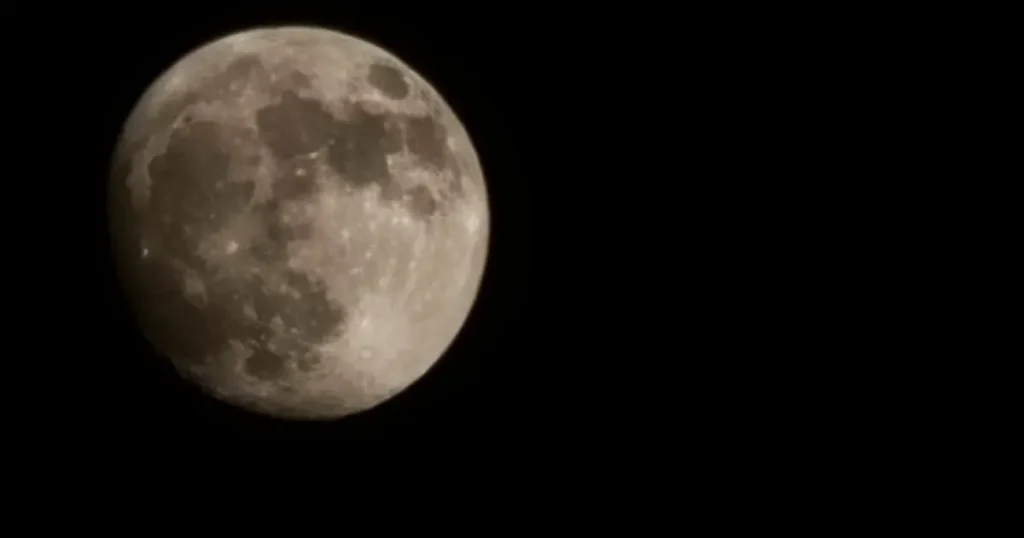
She returns to the same spot on the same veranda, exactly one lunar month after the first night. Nothing about the setting has changed — the same tray, the same cushion worn slightly flat in the same place. But the moon overhead is not quite what it was. A sliver of its edge is missing, almost imperceptibly, the way a held breath is almost imperceptibly different from a full one.
No one else is watching to confirm this. There is no festival crowd tonight, no shrine stall selling dango. Just her, the slightly lesser moon, and the quiet understanding that this second, smaller viewing is the one that makes the first one count.
I. What Counts as Complete
The full moon of jūgoya offers an easy, immediate kind of satisfaction — round, bright, symbolically complete in a way that requires no explanation. It would be simple to treat that single night as the entire point of the season and stop there. Most cultures with moon-viewing traditions do exactly that.
Japanese custom quietly refuses this shortcut. Completeness, in this tradition, is not something a single perfect night can deliver on its own. It has to be earned across two appointments, a month apart — one full, one not.
II. The Discipline of Returning
Older etiquette called it katami-zuki — “one-sided moon-viewing” — to watch only the fifteenth night and let the thirteenth pass unmarked, and treated it as a subtle but real breach of manners. The judgment embedded in that phrase is worth sitting with: it does not criticize anyone for failing to appreciate beauty. It criticizes them for appreciating it only when beauty made itself easy.
To keep the second appointment is to practice something closer to a discipline than a preference — a willingness to show up again, deliberately, for something that will offer less spectacle the second time than it did the first.
III. A Moon Slightly Less Than Whole
Jūsanya’s moon is traditionally waxing, not yet full, missing a sliver most casual observers would not notice unless they were looking for it specifically. This is not an aesthetic accident. A moon just short of completion asks something different of the person watching it than a full moon does — not admiration for an achieved perfection, but attention to a state still quietly in progress.
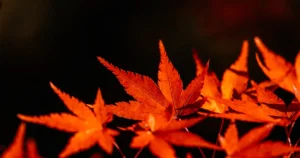
Where the wabi-sabi found in the maple leaves of this same season locates beauty in visible decline, jūsanya locates it somewhere gentler still: in the almost-but-not-yet, the beauty of a thing caught mid-way honestly, without pretending to be further along than it actually is.
IV. A Spirituality Made of Small, Repeated Attention
Two quiet nights, a month apart, with no priest presiding and no doctrine to recite, may not look like religious practice to an outside observer. And by the standards of traditions built around singular declarations of faith, it isn’t one. But Japanese spirituality has rarely organized itself around singular declarations to begin with — it tends instead toward small, repeated acts of attention paid to things that are already there: a moon that will rise regardless of who watches it, honored twice rather than once, quietly, without an audience required to validate the gesture.
This is a spirituality expressed less through belief stated aloud than through behavior repeated on schedule — showing up again, on the thirteenth night, for no reason that would satisfy someone looking for a doctrine, and every reason that would satisfy someone who understands stillness as its own form of devotion.
V. What Repetition Deepens
A single moon-viewing is an event. Two, a month apart, become something closer to a practice — and practices, unlike events, accumulate meaning precisely because they are repeated rather than singular. The second night does not simply add more beauty to the first. It reframes it, retroactively, as the opening half of something that was never meant to stand alone.
This is, in miniature, the same turning this entire seasonal series takes its name from — meguru, the sense that nothing here is meant to be witnessed only once and set aside. The moon comes back changed. So, quietly, does the person who returns to look at it.
The first moon asks to be admired. The second asks only to be returned to.
What in your own life have you only ever witnessed once that might mean more if you returned to it a second time?


Comments