
冬
FUYU — WINTER
Prologue
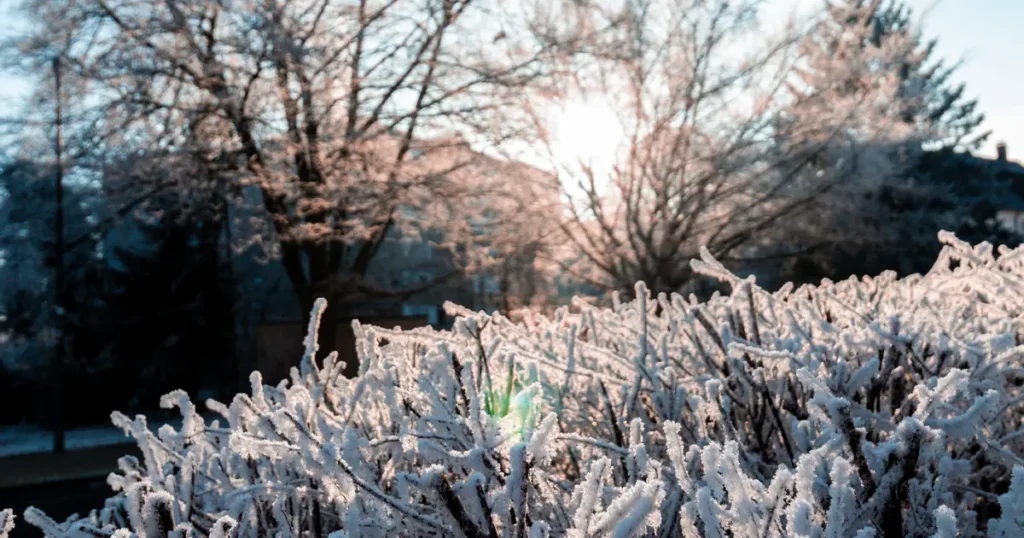
Snow does not announce itself the way rain does. It arrives already quiet, and quiets everything further — footsteps softened, traffic muffled, the usual edges of the world blurred into something gentler than they were an hour before. A city under snow is, briefly, a city that has stopped insisting on itself.
Inside, a low table has been prepared. A blanket is tucked around its legs, a heater glows beneath it, and for the length of an evening, an entire family narrows its world down to the radius of that single warm square.
I. The Season of Withholding
Where summer overflows and autumn spends itself in color, winter in Japan practices restraint. Trees stand bare without apology. Gardens are raked into bare gravel and stone, their beauty no longer dependent on anything blooming.
This is not absence for its own sake. It is a kind of editing — everything that is not essential has been let go, so that what remains, however small, can be seen clearly.
II. Small Fires
Long before central heating, Japanese homes were built to let cold air move freely, and warmth was instead concentrated into small, deliberate points: the sunken hearth of an irori, later the kotatsu’s single heated table. Warmth was never meant to fill an entire house — only to gather people into one place.
There is an intimacy in this that central heating quietly removes: when warmth is limited, people sit closer, stay longer, and the cold outside the circle becomes part of why the circle matters.
III. What Snow Makes Room For
In Japanese aesthetics, ma refers to the meaningful pause — the silence between notes of music, the space in a room, the gap that is not absence but structure. Snow may be the most literal expression of ma that the natural world offers: a blank field laid over everything, not to erase what is underneath, but to let it be sensed rather than seen.
A garden under snow is not a garden that has disappeared. It is a garden asking to be remembered rather than observed — a rare instance of a landscape trusting the viewer’s memory over their eyes.
IV. Preparing to Begin Again
In the final days of the year, homes across Japan undergo osoji, a thorough cleaning that is less about tidiness than about closure — clearing not just dust but unfinished business, so that the new year can be entered without carrying the old one’s weight.
A kadomatsu of pine and bamboo is set at the entrance, mochi is pounded and stacked in pairs, and for a few days the entire country seems to hold its breath in the same quiet, deliberate posture — not resting, exactly, but readying.
V. The Turn Toward Light
At the coldest point of the year, on the shortest day, something quietly reverses. The night that has been winning, slowly, all season long, begins — by minutes at first, almost too small to notice — to lose ground. Nothing about the cold changes yet. Only the direction does.
This is the quiet promise winter carries at its very center: that the deepest point of withdrawal is also, without exception, the beginning of the turn back toward light — the season proving, before spring ever arrives, that meguru, the turning, does not stop.
Winter does not end the year. It closes one circle so that another can quietly begin.
What have you let go of this year that made room for something quieter and truer to remain?

Comments