茶CHA — One Bowl. Four Walls. Two Hours of Nowhere to Be.
KOTO/The Intangible Resonance | MEGURU STILLNESS JAPAN
On chado —
the Japanese way of tea — and what happens to time inside a room you cannot stand up straight in
The entrance to a tea room is called a nijiriguchi (躙口) — a crawling entrance. It is approximately sixty centimeters square. To pass through it, you must lower yourself to your knees and fold your body in half.
The first time I entered one, I did it badly. I was slow, and uncertain, and I caught my shoulder on the frame, and when I finally made it through and sat back on my heels in the dim, small room, I was already slightly undone. Outside, the world was continuing. In here, the proportions were different. The ceiling was closer. The air was stiller. The sound of traffic — I had been able to hear it clearly until the moment I crossed the threshold — had stopped.
I have thought about that moment many times since. The nijiriguchi is not simply a small door. It is a mechanism. It enforces humility physically — you cannot swagger through a sixty-centimeter opening — and it marks a transition that the body must perform before the mind can follow. You do not decide to leave the outside world behind. You are required to.
Chapter 1
The room that removes everything unnecessary
A traditional tea room is four and a half tatami mats — approximately nine square meters. This is not a constraint that the tradition works around. It is the tradition. The smallness is deliberate: it is the minimum space required for one host and a small number of guests to exist in the same room without anything between them. No furniture to hide behind. No distance to maintain. Four and a half mats, and everything in them, were chosen.
The tokonoma — the alcove — holds a hanging scroll and a single flower arrangement. Not several flowers. One spray, or one stem, chosen to acknowledge the season. The scroll carries a phrase in brushed ink: typically a Zen or poetic inscription that sets the tone for the gathering. These two objects — the scroll and the flowers — are the only decorations in the room. Everything else is structure: tatami, clay walls, a window placed to catch specific qualities of light at specific times of day.
The effect of this restraint is difficult to describe to someone who hasn’t experienced it. The room does not feel empty. It feels complete — in the way that a sentence with every unnecessary word removed feels more present than a long one. Each object in the room has been given room to mean something. There is no competition for attention. And in that absence of competition, attention itself changes. It slows. It deepens. It begins to notice things it would normally pass over.
| The vocabulary of the tea room |
| Nijiriguchi – 躙口 | The crawling entrance. Approximately 60cm square. Forces the body into a posture of humility before entry. Originally, it ensured that samurai left their swords outside; today it marks the boundary between ordinary and tea-room time. | |
| Tokonoma – 床の間 | The alcove. Holds the hanging scroll and seasonal flower arrangement. The only decorated surface in the room, its contents are changed for every gathering to mark the particular moment in time. | |
| Ro / Furo – 炉/風炉 | The hearth (ro) is set into the floor in winter; the portable brazier (furo) sits on the surface in summer. The transition between them — in November — is the most important calendar event in the tea world, equivalent to a new year. | |
| Shoufu – 松風 | Literally “wind in the pines.” The sound of water beginning to heat in the kettle — a low, sibilant hiss that rises and falls. In a quiet tea room, it is often the loudest sound. Considered essential to the atmosphere, the kettle is chosen partly for the quality of this sound. | |
The vocabulary of the tea room — 茶室の語彙
Chapter 2
Ichigo ichie — the meeting that will not come again
The phrase most associated with chado is ichigo ichie (一期一会) — one time, one meeting. It is attributed to the sixteenth-century tea master Sen no Rikyu, who is credited with defining the aesthetic and philosophical foundations of tea as it is practiced today. The phrase means, roughly, that this gathering will never happen again exactly like this, and so it should be treated as the singular event it is.
This is not, as it might first appear, a counsel of melancholy. It is a counsel of attention. The point of ichigo ichie is not that the gathering will end — everything ends — but that its ending is already present from the beginning, and that this fact, properly understood, transforms the quality of presence it asks of everyone in the room.
Ichigo ichie does not mean: appreciate this because it will end.
It means: be here, because here is all there is.
In a culture oriented toward productivity and forward motion — and I mean North American culture here, the culture I come from — this is a genuinely countercultural idea. We are trained to treat the present moment as a resource to be allocated: how should I spend this time? What am I getting from this? What will I do when this is over? Ichigo Ichie, as a practice, asks you to stop. Not to be mindful of the present moment in the therapeutic sense — not to observe it — but to simply be it, without an outside position from which to observe.
The architecture of the tea room makes this possible in a way that an instruction or a philosophy alone cannot. You are physically small in that space. You cannot easily check a phone — there is nowhere to put it, and the social gravity of the room makes reaching for it feel like an act of significant rudeness. The kettle is making its sound. Someone has made something for you, with considerable care, and is now offering it to you with both hands. The particular quality of light through that particular window is available only right now, in this season, at this hour.
The room does not ask you to appreciate any of this. It makes appreciation — or something more than appreciation, something closer to inhabiting — very difficult to avoid.
Chapter 3
The body that learns before the mind
Chado is learned primarily through the body. This is not a metaphor — the practice is not amenable to learning through books or observation alone. You must do it, repeatedly, over years, until the movements become something other than movements: an accumulated physical grammar that runs below thought.
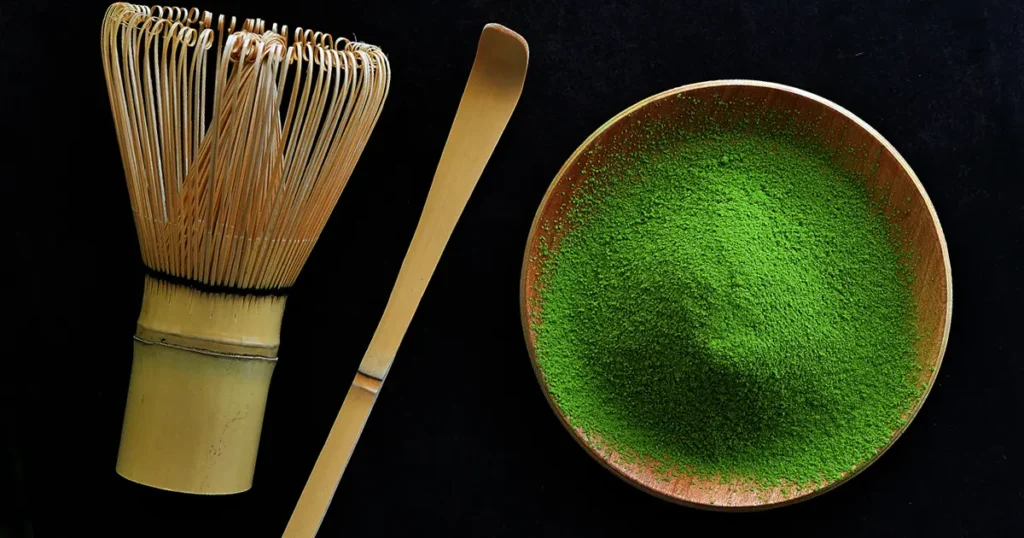
The movements of the tea preparation — temae (点前) — are precisely choreographed. How the chakin (tea cloth) is folded. How the chashaku (tea scoop) is turned. How the chasen (tea whisk) is held, moved, and returned to its rest position. The angle of the wrist when placing the bowl. These are not stylistic choices. They are a codified form of physical attention — a way of moving that embeds, in the body of the practitioner, a quality of care that, over time, extends beyond the ritual itself.
I have sat in on several tea gatherings as a guest, and once attempted to learn basic temae over a period of some months. The gap between what I could see and what I could do was, at first, absolute. The movements that looked simple in the hands of an experienced practitioner were, in my hands, effortful and wrong in ways I could not locate. My wrist would not turn at the right moment. The cloth would not fold the way I wanted it to. The bowl, received in two hands as it should be, felt precarious rather than held.
What I noticed, though, was this: the instruction I received was almost never verbal. My teacher — a woman who had practiced for more than thirty years — would correct my hands by placing hers over them, adjusting the angle with a pressure and direction that conveyed exactly what words could not. Her hands knew something that her language did not contain. This, I came to understand, is what makes chado essentially unteachable through description — and why the tradition has survived only through continuous physical transmission.
What I noticed, though, was this: the instruction I received was seldom verbal. My teacher — a woman who had practiced for more than thirty years — would correct my hands by placing hers over them, adjusting the angle with a pressure and direction that conveyed exactly what words could not. Her hands knew something that her language did not contain. This, I came to understand, is what makes chado essentially unteachable through description — and why the tradition has survived only through continuous physical transmission.
Chapter 4
The bowl in both hands
At some point in the gathering, the bowl is placed in front of you. You receive it with both hands. This is not a courtesy — it is a complete act. Both hands mean: I am using all of my available attention for this. It means: nothing else is happening for me right now. It is the physical form of the principle ichigo ichie: your full presence, embodied in the posture of your arms.
The bowl I have held most often in tea settings is Tamba ware — the same clay, from the same valley, that I wrote about before. In a tea room, the same properties that make Tamba ware good for everyday use — its weight, its warmth, the slight irregularity of its surface — become something more. The weight is a claim on your attention. The warmth communicates directly from the clay to the hand. The irregularity gives you something to find with your fingers, and in finding it, you are briefly entirely present in the object.
The tea itself — the matcha, thick and slightly bitter — completes the circuit. You drink it in three and a half sips, traditionally. Not because three and a half is the correct number, but because the number gives you a form: a beginning, a middle, and an end, with a half-sip at the end that acknowledges the residue, the last of it, the fact that it is now gone. The form of the drink is a small, edible version of ichigo ichie.
Chapter 5
What Chado is not
Chado is frequently described, in English-language contexts, as a form of meditation. I want to push back on this gently, because I think it sells both practices short. Meditation, in the forms most familiar to Western audiences, involves observing the contents of the mind from a position of detachment: you watch your thoughts without following them, your breath without controlling it. The practice cultivates a kind of witnessing.
Chado does not cultivate witnessing. It cultivates inhabiting. The goal is not to observe the preparation of tea; it is to be the preparation of tea — to inhabit the movements so completely that the distinction between doing and being dissolves. This is closer to what Zen calls mushin (無心): not the absence of mind, but the absence of the separation between mind and action. The tea is made. You are making the tea. At some point in the practice, these are no longer two different things.
I want to be honest: I have never reached that point. My practice is too shallow and too intermittent. But I have been in rooms where someone else had reached it — where I could see, in the economy of their movement and the quality of their attention, that they were not performing the preparation of tea but doing it in a way that contained no gap between intention and action. These moments are observable from the outside. They have a particular quality of stillness that is different from the stillness that is merely the absence of motion.
I think about chado most often not in tea rooms but in ordinary life — in moments when I am doing something quickly that does not need to be done quickly, or giving partial attention to something that deserves full attention, or treating the present moment as an interruption on the way to the next thing.
The tea room is designed to make these habits impossible, temporarily. The nijiriguchi forces a transition. The absence of furniture removes distraction. The sound of the kettle provides an anchor. The bowl in both hands completes the circuit. For two hours — or one hour, or however long the gathering lasts — the room enforces a quality of presence that ordinary life does not.
And then you pass back through the nijiriguchi — folded in half again, the same as when you entered — and the world resumes. The traffic is audible again immediately. Your phone is where you left it. The ordinary continues.
What changes, if anything changes, is more subtle than that. It is something closer to a recalibration — a reset of what you understand attention to be capable of. You have spent two hours being somewhere, fully. The ordinary continues, but you carry, briefly, the memory of what it is like to have nowhere else to be.
Wa Kei Sei Jaku — 和敬清寂
和敬清寂
Wa Kei Sei Jaku
Harmony. Respect. Purity. Tranquility.
The four principles of chado, placed here, at the end — after everything they describe has already been experienced.


Comments